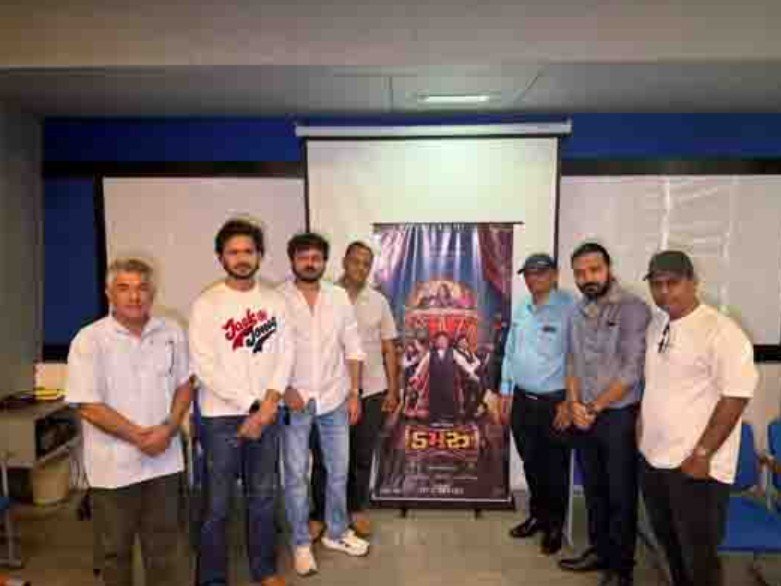
Gujarati cinema is asking a question that goes far beyond the fate of one film: what is the value of producing regional-language movies if they cannot secure a fair opportunity to reach audiences in their own home state? Team Damru has taken its demand for adequate theatrical screenings to the public, urging the Gujarat Government, multiplex operators, single-screen owners and distributors to create a transparent, commercially sensible system that gives Gujarati films a fighting chance.
The appeal is not for preferential treatment for one production, nor is it a call to shut the door on Hindi or other-language releases. It is a demand for a level playing field—one where audience demand, occupancy, commercial performance and the interests of local-language cinema all have a place in decisions about screen allocation.
At the centre of the campaign is the Gujarati comedy-drama Damru, produced under the banners of Gujotsav Productions and Vraj Films and directed by Hardik Pareekh. Actors Makrand Shukla, Nakshraj, Saurabh Rajyaguru and ‘Action King’ Maulik Chauhan, along with producers Ramesh Prajapati and Sanjay Soni of Vraj Films, have joined the appeal for a more supportive exhibition ecosystem.
The team says the film has received encouraging audience response since its theatrical release but faces difficulties securing adequate showtimes amid competition from larger releases, including Ramayana. Its central argument is straightforward: when audiences are willing to buy tickets for a Gujarati film, that demand should be given due consideration in scheduling decisions.
A screen is more than a commercial slot
For a regional film, theatrical access is not merely the final step in a production cycle. It is the bridge between the filmmaker’s investment and the audience’s response. Without a reasonable opportunity to reach viewers, even a completed film with an appealing story, local relevance and favourable word of mouth can struggle to recover its costs.
Team Damru says the current situation exposes a structural vulnerability in the Gujarati film industry. Producers may invest in scripts, performers, technicians, locations and marketing, yet remain dependent on exhibition decisions over which they have limited control.
The team argues that screen allocation should be guided by measurable indicators—including ticket sales, occupancy and audience demand—rather than the scale of a film’s promotional campaign or the financial muscle of its distributor.
Such a system would not guarantee every Gujarati production a successful run. Nor would it require cinema owners to retain a film that fails to attract audiences. Instead, it would provide a transparent basis for deciding which films receive shows and when those allocations should be reviewed.
The principle is particularly relevant when a new, heavily promoted release enters the market. The arrival of a major Hindi film should not automatically mean that a Gujarati film with demonstrable local demand loses its opportunity to connect with viewers.
The real test is not whether Gujarati cinema receives special treatment, but whether it receives a fair chance to compete.
From a film-specific appeal to an industry-wide demand
Team Damru has urged Chief Minister Bhupendra Patel, Deputy Chief Minister Harsh Sanghavi, cinema owners and distributors to consider allocating at least one or two daily shows to the film where audience demand justifies the arrangement.
But the broader appeal extends beyond Damru. The team wants a sustainable framework for Gujarati-language cinema, including incentives for multiplexes and single-screen theatres that screen regional films, clearer exhibition norms and a minimum initial theatrical window for qualifying productions.
A carefully designed policy could link continued show allocation to actual performance, allowing exhibitors to protect their commercial interests while giving regional films a reasonable opportunity to establish themselves.
The distinction matters. A blanket requirement that every film receive the same number of shows, regardless of demand, could prove commercially impractical. A transparent, performance-linked mechanism would offer a more balanced alternative.
The team has also proposed a comprehensive memorandum seeking a dedicated support mechanism and amendments to Gujarat’s 2022–27 Cinematic Tourism Policy. It plans to approach the state authorities with proposals intended to address the industry’s longer-term exhibition concerns.
The immediate demand is for screens. The larger objective is to ensure that screen access does not remain a recurring uncertainty for Gujarati filmmakers.
Can Gujarat learn from other states?
The team has pointed to regional-cinema support measures in other parts of India, including Maharashtra and southern states, and has argued that Gujarat should examine models that provide greater certainty for local-language productions.
Such comparisons require careful examination because the rules, incentives and implementation arrangements vary between states. Any proposed amendment should therefore be based on a verified assessment of existing policies, their enforcement and their impact on exhibitors and regional filmmakers.
Gujarat could consider a framework that combines incentives for theatres screening Gujarati films with transparent reporting of show allocations and performance. A consultation involving producers, distributors, exhibitors, artists and government officials could help establish rules that are practical rather than merely aspirational.
The team maintains that production-related assistance alone cannot guarantee the success of a regional film if it lacks access to theatres. A film-support policy, it argues, should consider the entire chain—from production and promotion to distribution and exhibition.
The objective should be to build an ecosystem in which Gujarati cinema can attract private investment, nurture new talent and reach audiences without relying on a fresh campaign for screen access every time a major release arrives.
The livelihood question behind the screen struggle
The stakes extend well beyond producers and lead actors. Film production supports a broad workforce that includes cinematographers, camera assistants, lighting crews, technicians, editors, spot boys, musicians, make-up artists, drivers, caterers and numerous other professionals.
When a film’s theatrical run is curtailed before its audience potential is properly tested, the consequences can reach across this chain of employment. A more predictable exhibition environment could help producers plan investments, sustain production activity and offer greater continuity of work to industry professionals.
There is also a question of affordability. Team Damru has contrasted the ticket prices it cites for Gujarati films—around ₹100 to ₹200—with the ₹1,500 to ₹2,000 prices it says some premium festive-season cinema experiences can reach. These figures are not universal prices, but they highlight a legitimate public-interest issue: cinema should remain accessible to families across income groups.
Affordable regional-language films can offer audiences entertainment in their mother tongue, with stories, humour and cultural references rooted in their own lives. Ensuring their availability does not diminish the value of large-budget productions. It broadens the range of choices available to the public.
A permanent solution, not a seasonal protest
Team Damru says it is preparing to seek a lasting solution through policy amendments and a formal engagement with the state government. Its proposed memorandum is expected to press for exhibitor incentives, a transparent support mechanism and a permanent consultative forum involving producers, distributors, theatre owners, artists and government representatives.
Such a forum could examine recurring issues before they escalate into public disputes: how screens are allocated during crowded release weekends, how occupancy is assessed, how regional productions are promoted, and whether incentives can encourage exhibitors to give local-language films a reasonable opportunity.
For the Gujarat Government, the issue presents an opportunity to connect cultural policy with industrial development. Gujarati cinema is not only a medium of expression; it is also an enterprise that creates employment, supports small businesses and provides a platform for local talent.
For cinema owners, a transparent framework could offer clearer expectations while preserving the freedom to make commercially informed decisions. For producers, it could provide greater predictability when committing capital to new projects.
And for audiences, the outcome should be simple: more meaningful choice and a fair opportunity to watch Gujarati stories on the big screen.
Gujarati cinema does not need a guaranteed hit. It needs a fair chance to find its audience. Team Damru has placed that principle before Gujarat’s policymakers and exhibitors. The next step is to turn the appeal into a practical, evidence-based policy conversation—one that protects neither inefficiency nor monopoly, but gives regional creativity room to compete and grow.